2026-10-26
Event Report: Rewriting the Foundation for People and Organizations With AI & Where Mercari Stands Today—Mercari AI Career Fes 2026
Share


In July 2026, Mercari Group hosted Mercari AI Career Fes 2026, a large-scale conference dedicated to sharing insight into our company-wide transformation toward becoming an AI-Native company and our future vision.
We held the event in a hybrid format, combining in-person talks at Mercari’s Tokyo office with a live online simulcast. Sessions featuring speakers from across the company, including engineers, product managers, and corporate staff, kept the energy in the room running high throughout the event.
This report brings you full coverage—from the keynote through talks on technology, security, governance, marketing, creative, data, and organizational transformation—along with full-length video recordings and session digests.

Session overview
Archive videos from each session of the event are available below.
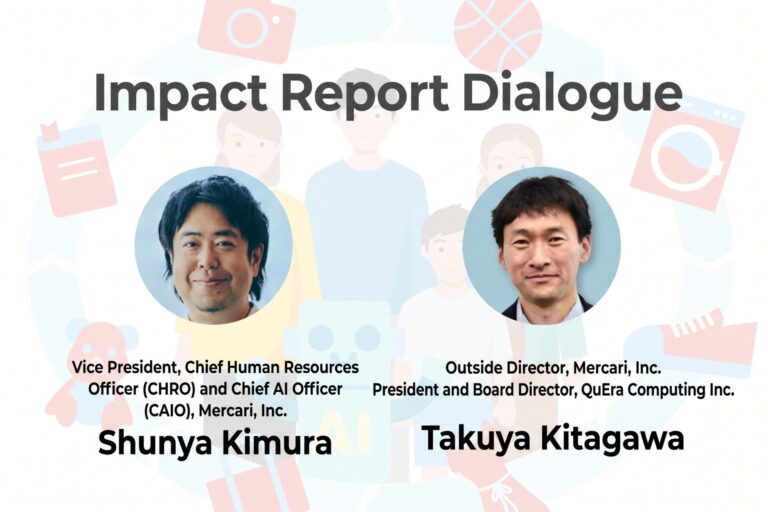
Keynote: Why did the CTO become CHRO and CAIO?
- Speaker: Shunya Kimura, Chief Human Resources Officer, Chief AI Officer
- 📺 Watch the recording (Japanese) / (English simultaneous interpretation)
The reality of going AI-Native: The unvarnished truth about Mercari behind the scenes
- Speakers: Munehiro Asai, HR & AI Project Management Office; Tsuyoshi Koizumi, AI Agent Platform & Solutions Manager; Sae Nuruki, AI Agent Platform; Yuta Ueno, AI Task Force; Kentaro Kobayashi, BI Product Manager
- 📺 Watch the recording (available only in Japanese)
AI Security & Governance: Building Guardrails to Accelerate AI Transformation
- Speakers: Jason Fernandes, Vice President of Security & Privacy and AI Governance; Hiroki Akamatsu, Platform Security; Yuka Ochiai, Legal Manager; Naofumi Hayakawa, Privacy Office
- 📺 Watch the recording (Japanese) / (English simultaneous interpretation)
To what extent can AI transform marketing, creative, and PR? Redesigning every stage of the process, from planning and production to distribution and operations
- Speakers: Takahiro Ishiwata, Marketing Manager; Megumi Kurosawa, Creative Manager; Sunghun Han, PR Manager; Ai Tsubono, Marketing
- 📺 Watch the recording (available only in Japanese)
Mercari’s engineering organization and development process in the push to go AI-Native
- Speakers: Motoki Narita, Vice President of Engineering (Marketplace Core); Keigo Watanabe, Vice President of Engineering (Merpay); Kengo Fujishiro, Director (Merpay); Yu Nakai, Manager, Vice President of Engineering Office (Merpay)
- 📺 Watch the recording (available only in Japanese)
- 📝 Read the event report (available only in Japanese)
What becomes of a data professional at an AI-Native company?
- Speakers: Kae Kato, Data Analyst for Marketplace Product Analytics; Naofumi Yamada, Software Engineer and BI Product
- 📺 Watch the recording (available only in Japanese)
Mercari’s Path to AI-Native Engineering
- Speakers: Taichi Nakashima, VP of Engineering Crossborder; Taqeem Bakar, Platform Product Engineer; Michael Galloway, VP of Platform Engineering; Snehal Shinde, Engineering Director
- 📺 Watch the recording (English) / (Japanese simultaneous interpretation)
How the Product Heads for Mercari & Merpay See Product Development in the AI Era
- Speakers: Heesung Lee, Vice President of Growth, Vice President of Product (Merpay); Tomohiro Furusawa, Vice President of Marketplace (Core); Sachie Urabe, HRBP Director
- 📺 Watch the recording (Japanese) / (English simultaneous interpretation)
Turning business opportunities into reality with AI: Mercari’s new products and a new approach to building them
- Speakers: Carlos Donderis, Vice President of Engineering AI Innovation; Takaaki Shinohara, Vice President of Product AI Innovation; Mizuki Inoue, Strategy Operations Manager; Yasuo Hishii, Director of AI/LLM Product
- 📺 Watch the recording (available only in Japanese)
Keynote: Why did the CTO become CHRO and CAIO?
- Speaker:
- Shunya Kimura (@kimuras, Chief Human Resources Officer, Chief AI Officer)
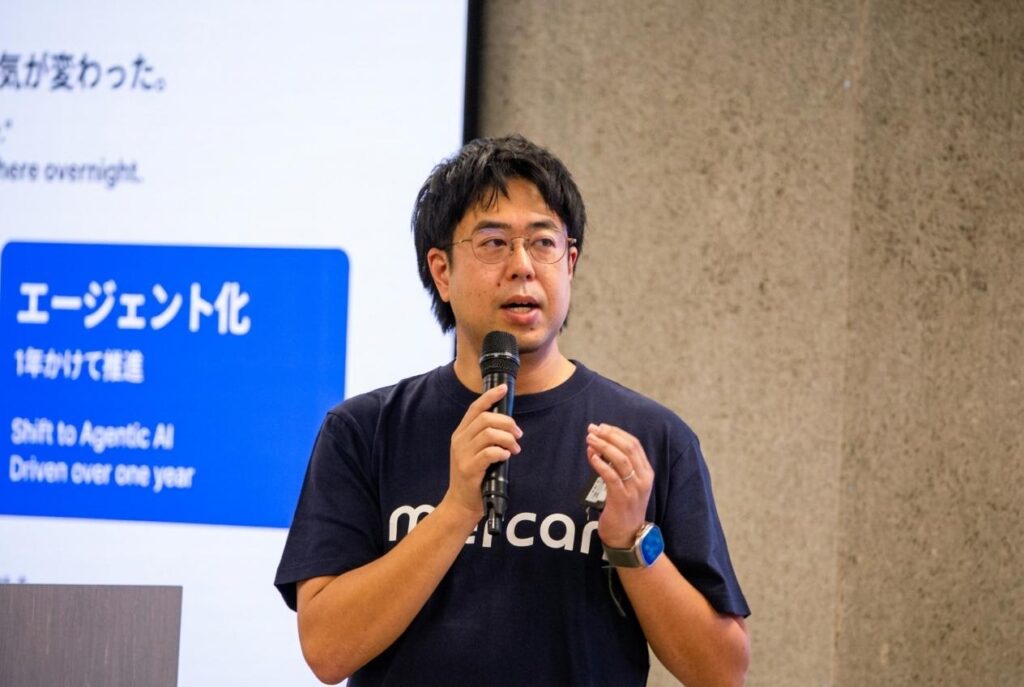
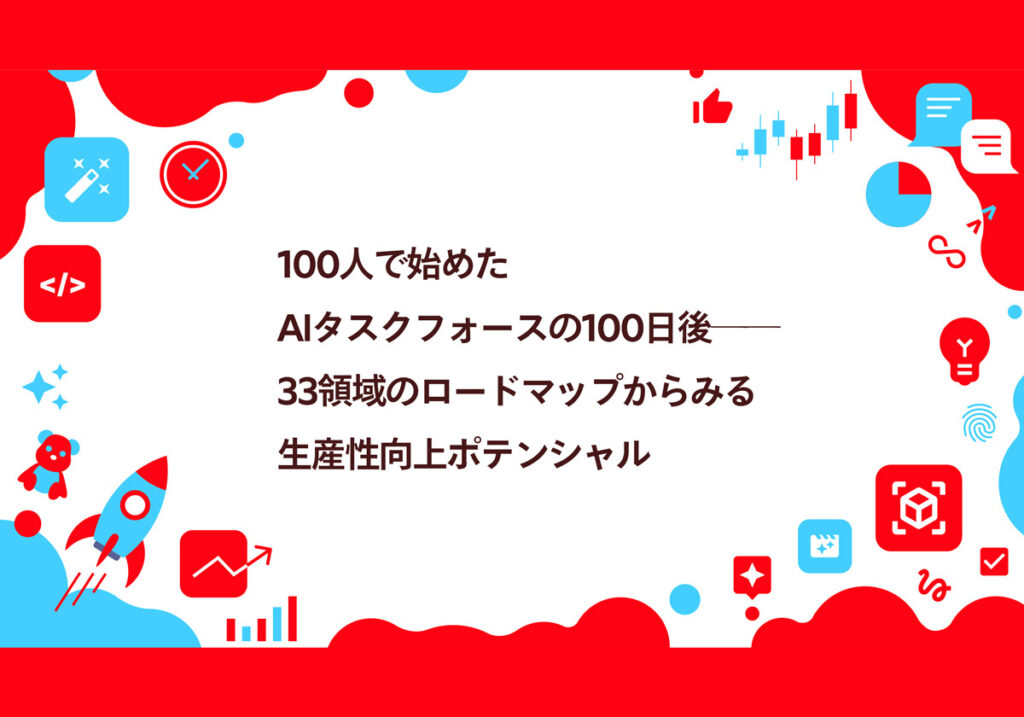
Mercari’s push to become an AI-Native Company gained real momentum when CEO Shintaro Yamada delivered a message to the entire company in May 2025 conveying his commitment to driving the transformation. In response, the company launched the AI Task Force which organized the company’s operations into 33 domains, driving the adoption of AI agents across each one. AI tools including Notion AI and Claude were also rolled out company-wide, achieving 100% adoption among employees.
In this session, Shunya stressed that simply deploying tools is not enough to drive meaningful transformation. To truly become an AI-Native company, he argued, the HR strategy needs to be redesigned in lockstep with the technology strategy, covering performance evaluation systems, job definitions, talent development, and organizational design. In the HR domain, where Shunya himself has served as CHRO since July 2026, the company is implementing AI agents across recruitment, evaluation, and labor management as part of an ongoing effort to codify tacit knowledge into AI skills.
The session also introduced AI Agent Day, a company-wide event in which every employee stepped away from their regular work for a full day to build autonomous AI agents firsthand. The importance of every employee owning the transformation, instead of just a dedicated group of drivers, was unmistakably clear.
📺 Watch the recording (Japanese) / (English simultaneous interpretation)
The reality of going AI-Native: The unvarnished truth about Mercari behind the scenes
- Speakers:
- Munehiro Asai ( HR & AI Project Management Office)
- Tsuyoshi Koizumi , AI Agent Platform & Solutions Manager)
- Sae Nuruki (@sae, AI Agent Platform)
- Yuta Ueno (@wakit, AI Task Force)
- Kentaro Kobayashi (@kobaken, BI Product Manager)
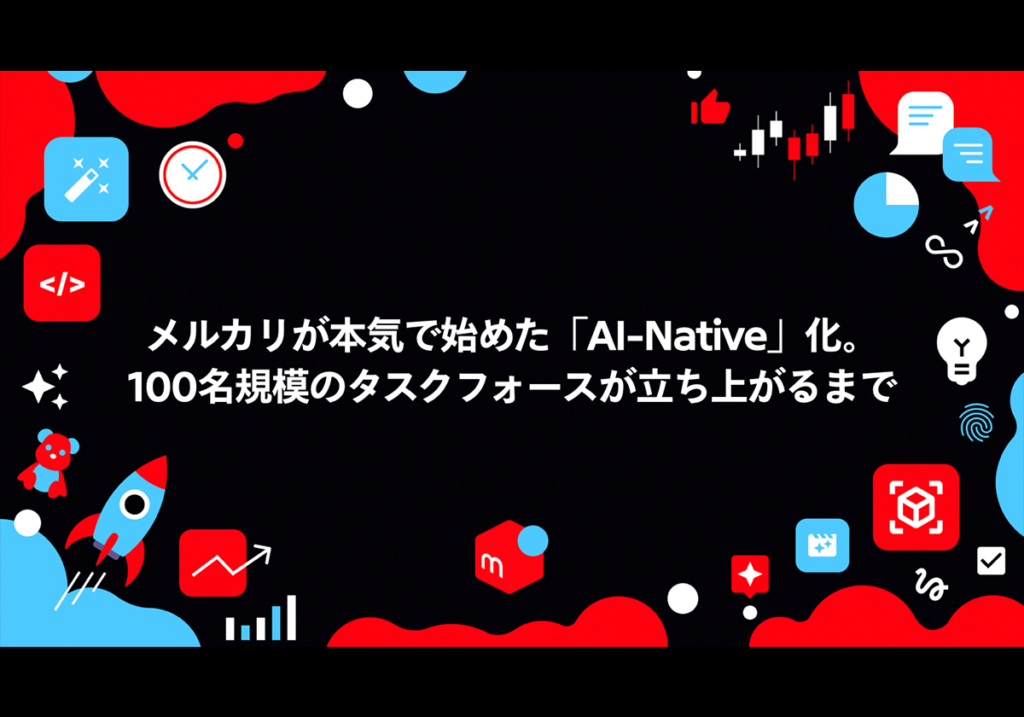
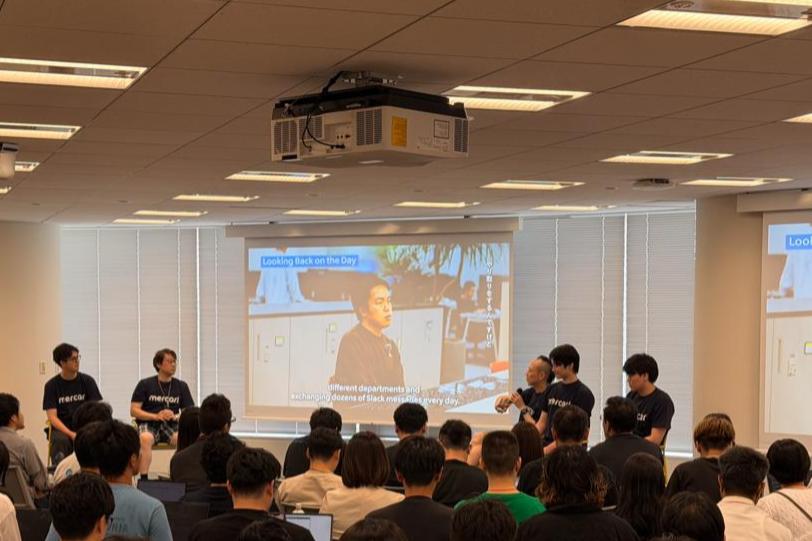
In this session, members of the AI Task Force shared the realities of change management as they drive AI-Native transformation across the company. Tsuyoshi (@ISSA) gave a presentation about a system that automatically grants AI tool licenses when someone posts a request on Slack, and automatically reclaims them when they go unused. He explained that the key to driving AI adoption was not just distributing tools, but embedding engineers as change agents within each department to create concrete success stories on the ground.
Sae (@sae) shared an initiative that made it possible for non-engineers to build AI agents directly tied to their own day-to-day work. Kentaro (@kobaken) spoke about the importance of organizing records, accessibility, and context in order to create an AI-readable environment where AI can correctly interpret information. Using the CC Agent, which was built to reflect the philosophy and knowledge of Mercari’s PR team, as an example, Yuta (@wakit) shared information on the practice of training AI like a team member by refining its skills through natural language over time.
📺 Watch the recording (available only in Japanese)
AI Security & Governance: Building Guardrails to Accelerate AI Transformation
- Speakers:
- Jason Fernandes (Vice President of Security & Privacy and AI Governance)
- Hiroki Akamatsu (Platform Security)
- Yuka Ochiai (Legal Manager)
- Naofumi Hayakawa (Privacy Office)
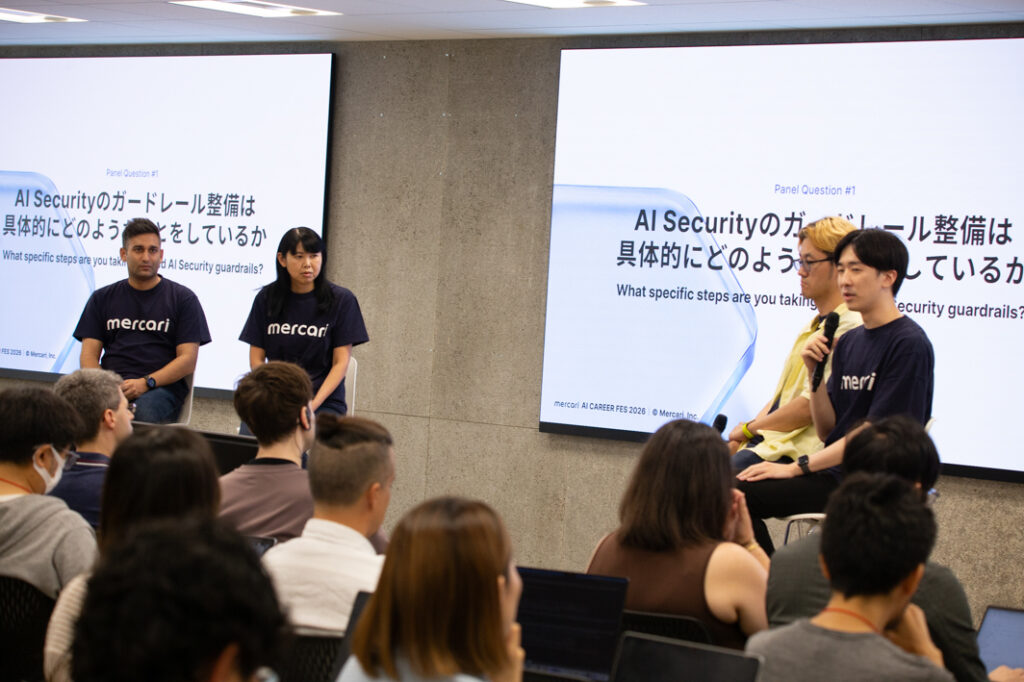
The AI Security and AI Governance teams frame governance not as a brake that slows things down, but as a structure that lets the organization press down on the accelerator with confidence. Jason Fernandes, Vice President of Security & Privacy and AI Governance, drew on the analogy of a Formula 1 car to explain AI governance, presenting a five-element framework: (1) steering (AI principles and the Acceptable Use Policy (AUP)); (2) guardrails (SSO, log monitoring, and similar controls); (3) seatbelts (automated security controls); (4) engine (driving progress alongside the AI Task Force); and (5) brakes (the ability to stop when necessary).
Hiroki walked the audience through technical guardrails including individual enterprise plan contracts, access management through Terraform, and the secure distribution of settings via MDM. From Legal, Yuka talked about a Notion AI-powered governance portal and AI risk review support, while Naofumi spoke about the importance of involving the second line from the earliest stages of the initiative, approaching challenges with a yes-and-how mindset to find safe ways to move forward.
📺Watch the recording (Japanese) / (English simultaneous interpretation)


To what extent can AI transform marketing, creative, and PR? Redesigning every stage of the process, from planning and production to distribution and operations
- Speakers:
- Takahiro Ishiwata (Marketing Manager)
- Megumi Kurosawa (Creative Manager)
- Sunghun Han (Marketplace PR Manager)
- Ai Tsubono (Marketing)
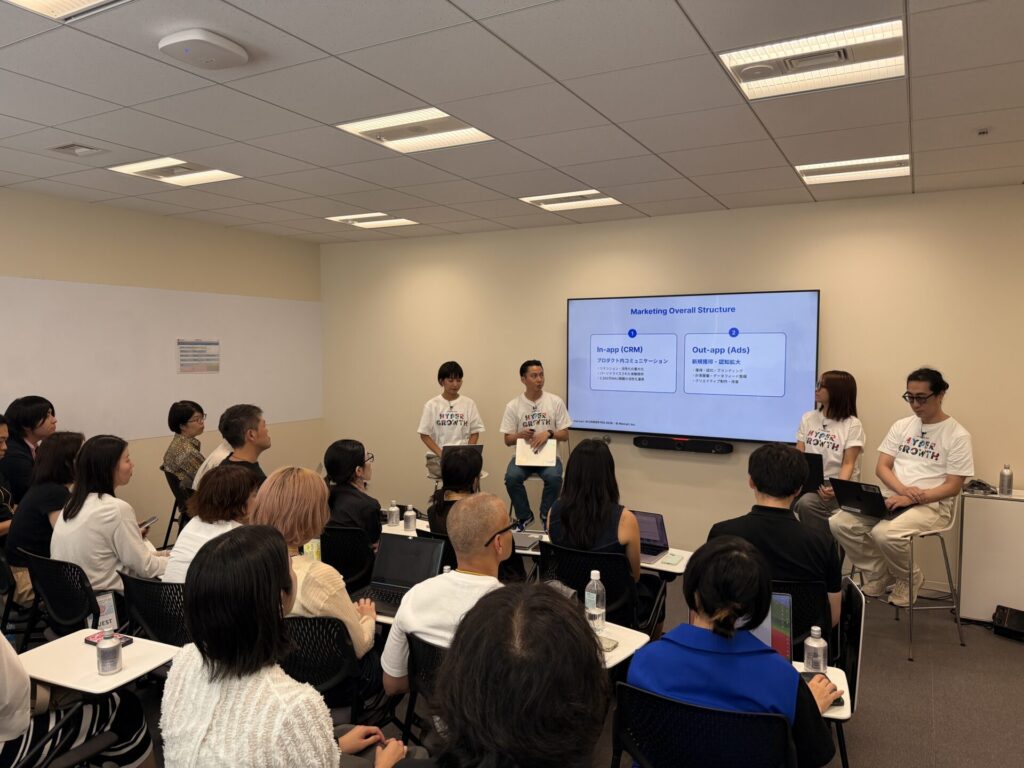
This session covered an initiative to use AI to redesign the entire value chain across marketing, creative, and PR, from planning and production through distribution and performance measurement. Takahiro described how structuring past data in Notion, automating reporting, and accelerating the creation of UI/UX prototypes in Figma have enabled marketers and designers to align on visual concepts in the earliest stages of a project.
For a promotional campaign built around transaction reviews, AI assisted the team at every step from extracting and analyzing reviews to developing story concepts and generating video content. In her presentation, Megumi introduced work converting licensed characters into 3D animation, translating content into multiple languages, and producing advertising in a short amount of time leveraging AI-generated illustrations. PR and marketing had one topic in common: designing guardrails to protect the brand and its relationship with society, which matters just as much as the ability to move fast.
📺Watch the recording (available only in Japanese)
Mercari’s engineering organization and development process in the push to go AI-Native
- Speakers:
- Motoki Narita (@motokiee, Vice President of Engineering [Marketplace Core])
- Keigo Watanabe (@keigow, Vice President of Engineering [Merpay])
- Kengo Fujishiro (@abcdefuji, Director [Merpay])
- Yu Nakai (@nnaakkaaii, Manager, VPoE Office [Merpay])
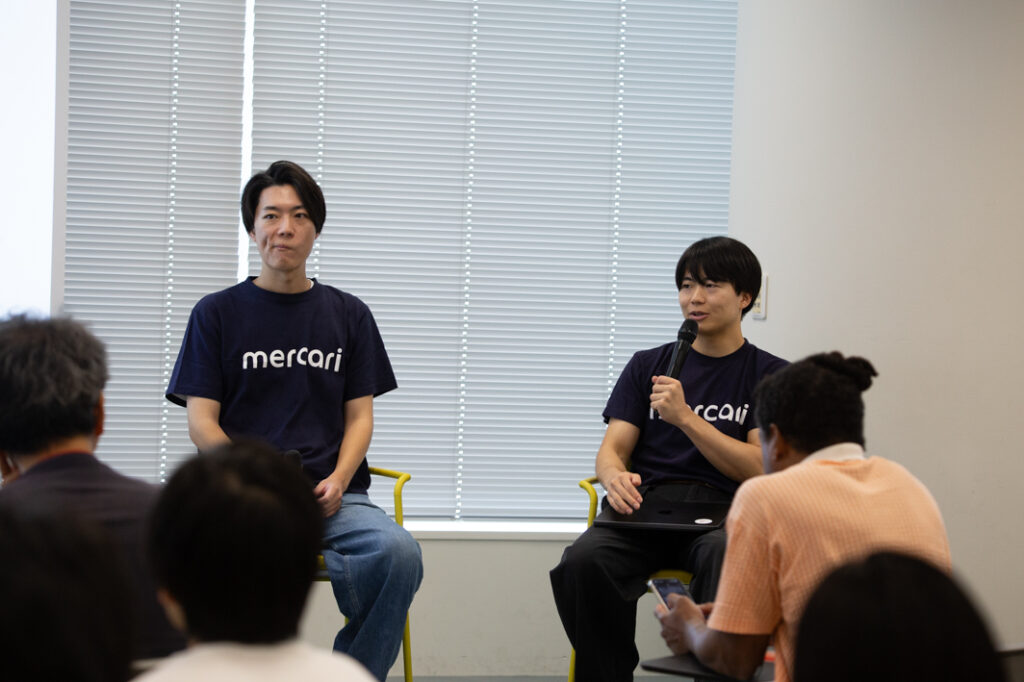
The engineering session explored how AI is being used to fundamentally reimagine the nature of development itself. Yu introduced agent-spec driven development (ASDD), a framework that moves away from individual vibe coding and instead anchors development in specifications optimized for AI agents. By clearly stating the API definitions, data models, test scenarios, and implementation steps, the process aims to guarantee a consistent level of quality regardless of who uses the agent.
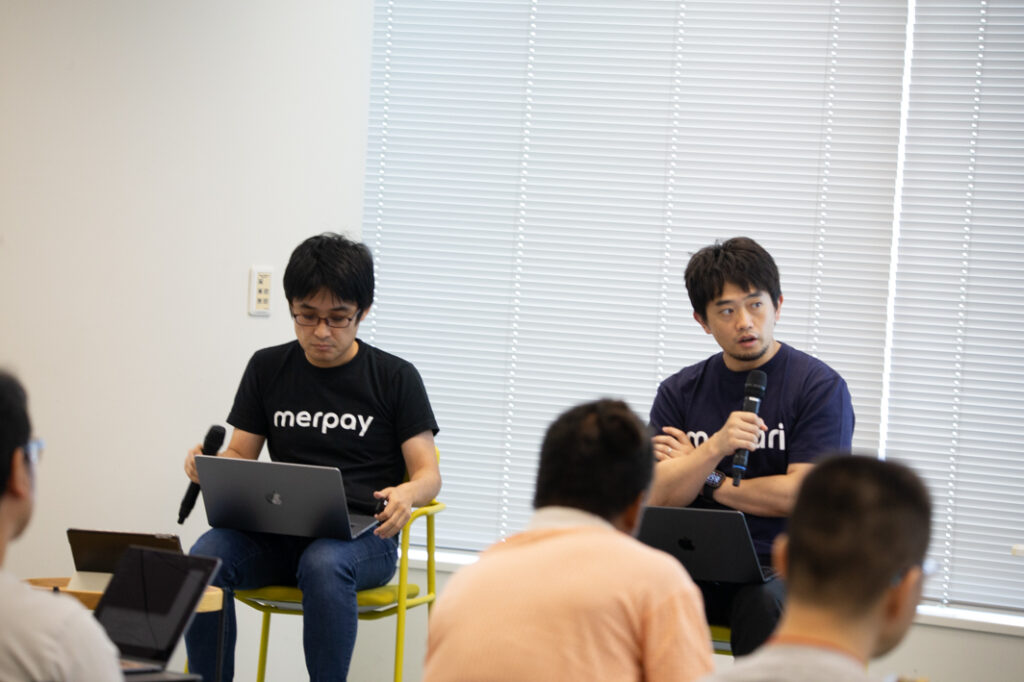
Kengo shared proofs-of-concept for AI Pods, covering small team structures, full-stack development, and AI-assisted development led by product managers. Motoki noted that while engineers are expanding their sphere of influence by crossing over into new roles, this has also introduced new challenges, including the need to develop design thinking skills and prevent burnout. Both Yu and Motoki also pointed to the need to redesign fragmented microservice clusters into architectures that are more manageable for both humans and AI.
📺 Watch the recording (available only in Japanese)
📝 Read the event report (available only in Japanese)
What becomes of a data professional at an AI-Native company?
- Speakers:
- Kae Kato (Data Analyst, Marketplace Product Analytics)
- Naofumi Yamada (Software Engineer, BI Product)
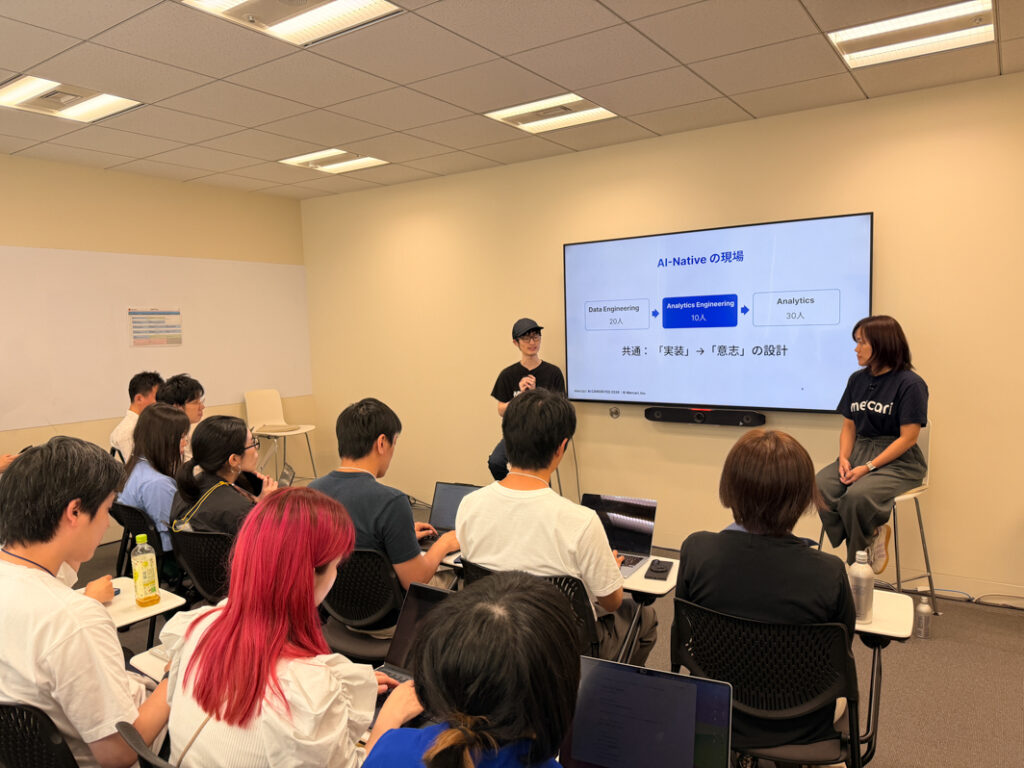
The data session explored how the role of data professionals will shift in an era where AI handles data analysis and coding. Socrates, the internal BI AI Agent developed by Naofumi’s team, generates SQL from natural language queries and can run aggregations and analyses on company data. It now has more than 500 weekly users, significantly lowering the barrier to working with data.
Kae’s presentation talked about the team’s investment in a semantic layer that standardizes definitions for key events such as listing and purchasing. The aim is to return the same values and interpretation regardless of which agent or tool the data is sourced from. Kae also said that analysts going forward must go beyond simply returning results. They will need to frame core business challenges and package their analytical expertise into reusable skills for AI agents.
📺 Watch the recording (available only in Japanese)
Mercari’s Path to AI-Native Engineering
- Speakers:
- Taichi Nakashima (@deeeet, VP of Engineering Cross Border)
- Taqeem Bakar (@Taqeem, Platform Product Engineer)
- Michael Galloway (@Michael, VP of Platform Engineering)
- Snehal Shinde (@Sneha, Platform Engineer)
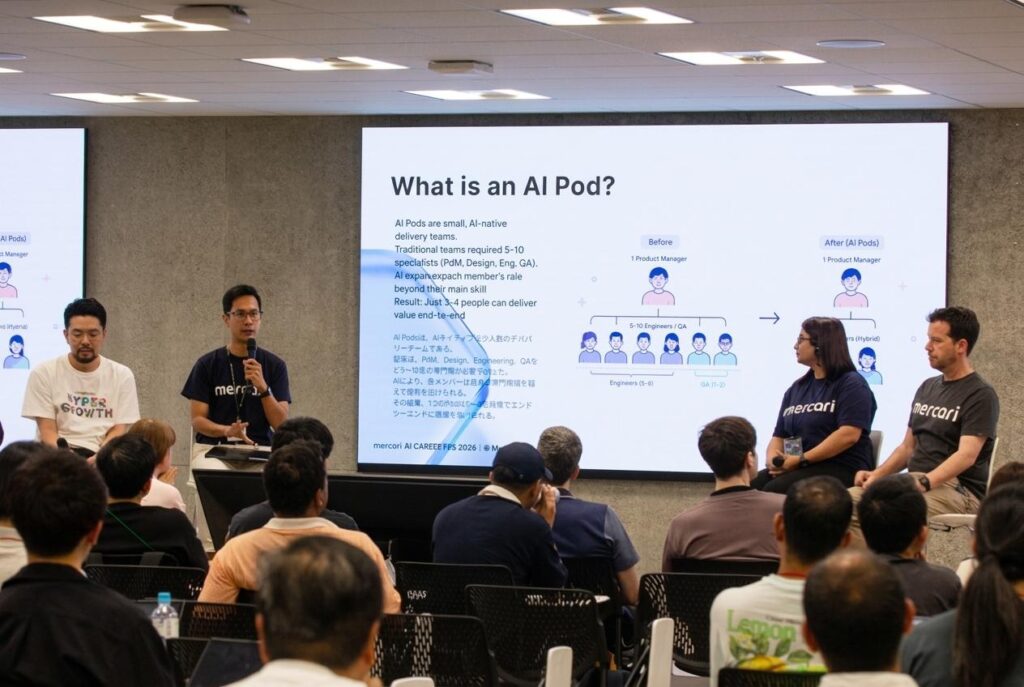
In a session titled “Mercari’s Path to AI-Native Engineering,” the speakers shared the engineering roadmap that Mercari’s engineering organization plans to pursue over the coming year.
The roadmap centers on three key phrases: (1) Build on AI, layering human decision-making on top of AI execution; (2) Build for AI, establishing the technical foundation for AI agents to operate safely and at speed; and (3) Build Global, scaling global expansion with small teams.
Questions from the audience also touched on the cost of tokens as AI agent usage scales up. The speakers noted that while they are pursuing optimization through a hybrid approach that combines templates and deterministic code, the more fundamental focus is business impact, not cost alone. If AI can cut the time to launch a new business from six or seven months down to one, the return on investment will speak for itself.
📺 Watch the recording (English) / (Japanese simultaneous interpretation)
How the Product Heads for Mercari & Merpay See Product Development in the AI Era
- Speakers:
- Heesung Lee (@lee, Merpay Vice President of Growth, Vice President of Product [Merpay])
- Tomohiro Furusawa (@furufuru, Vice President of Marketplace [Core])
- Sachie Urabe (@sacci, HRBP Director)
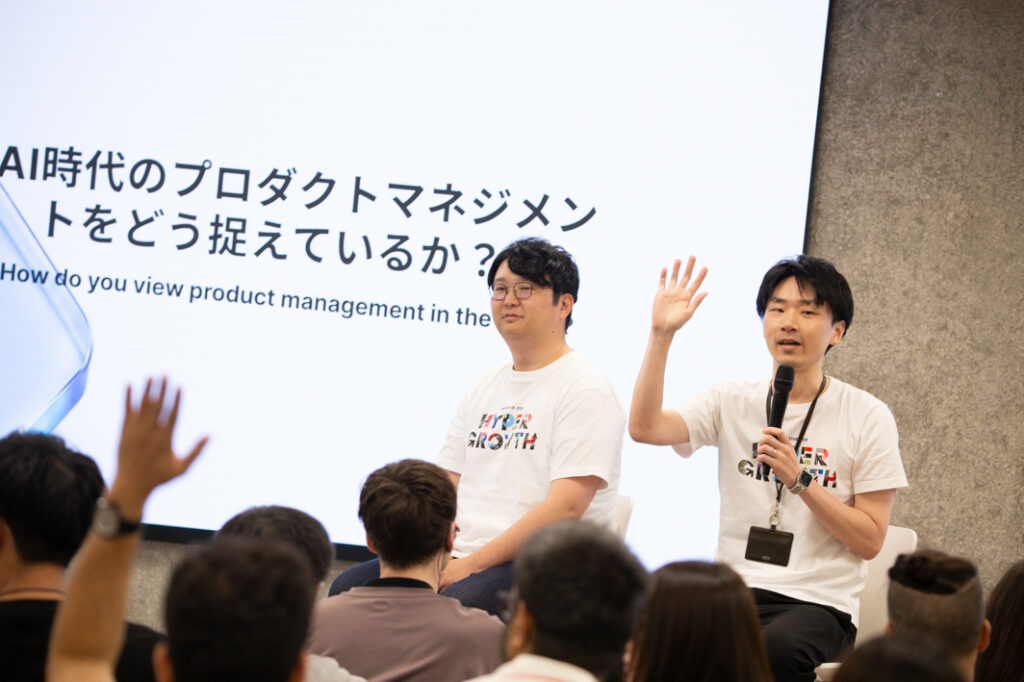
For this session, Sachie moderated a conversation with the product heads of Mercari and Merpay on product development and organizational transformation in the age of AI.
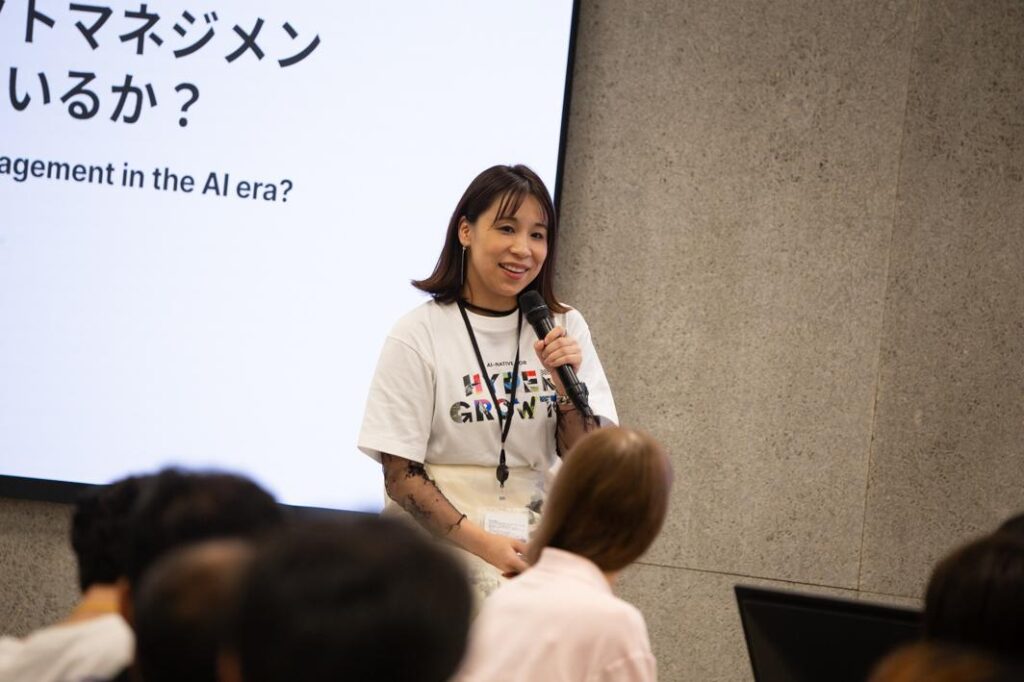
Heesung described a shift in how product managers create value, stating that there is a shift away from the question of how to build something in favor of the more fundamental question of why to build it. Tomohiro also noted that improving individual productivity alone is not enough to accelerate development across the whole organization, and that the handoffs between roles and the division of responsibilities need to be rethought.
The concrete solution introduced was AI Pods, a development model built around small teams of two to five people. Under this model, product managers focus on problem discovery and post-release learning, while product engineers (PdEs) own the full cycle from spec definition through implementation and release. Enablers maintain the design system and AI environment, supporting the “Build Fast, Discuss Faster” ethos of first building something that works and then discussing details. At the same time, speakers noted that applying this model to large-scale projects, making specialist judgment calls, and preventing member burnout all require strong support and backup from the wider team.
Looking to the product’s future, the speakers outlined the potential of cross-referencing Mercari’s unique data generated from buying, selling, and payments to create experiences tailored to each user’s specific needs. The session emphasized that building things people genuinely value to engage with human emotion and need remains the core of product development in the age of AI, no matter how much the pace accelerates.
📺 Watch the recording (Japanese) / (English simultaneous interpretation)
Turning business opportunities into reality with AI: Mercari’s new products and a new approach to building them
- Speakers:
- Carlos Donderis (@Cads, Vice President of Engineering AI Innovation)
- Takaaki Shinohara (@unryu-in, Vice President of Product AI Innovation)
- Mizuki Inoue (@mizukiino, Strategy Operations Manager)
- Yasuo Hishii (@hisshy, Director of AI/LLM Product)
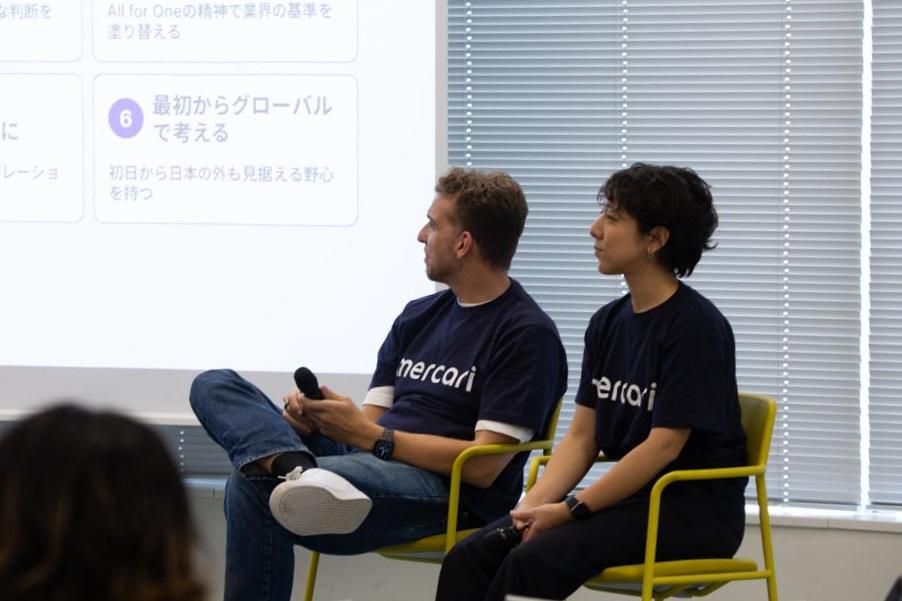
With Yasuo moderating, this session explored new product creation using AI Innovation and how the team organizing that work is structured. Takaaki described the team’s mission as “Create new products while establishing a new way to build them.” Their goal is to combine Mercari’s unique assets with AI to deliver more than just convenience—experiences that genuinely move users who care deeply about specific areas. The team is also experimenting with an approach to organizational management in which everyone on the team works beyond the confines of their role to own the product, from planning to implementation.
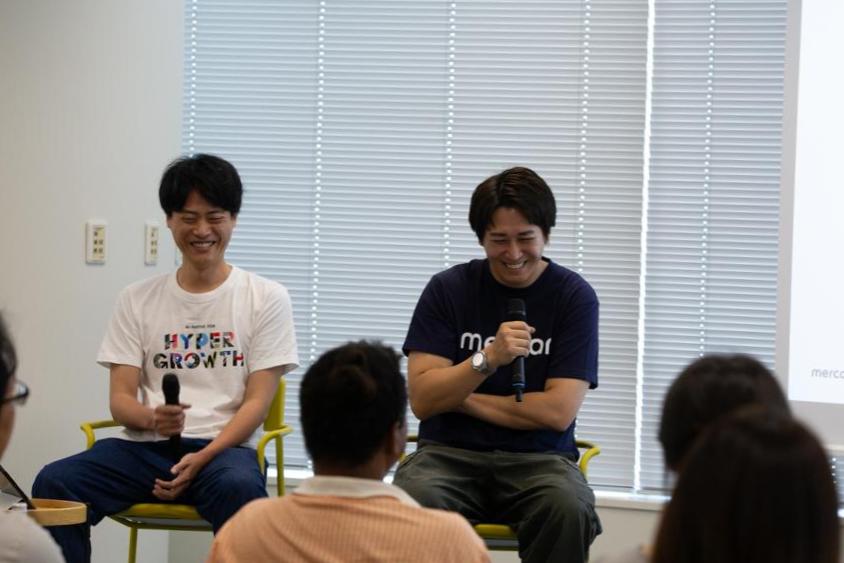
As a demonstration of Build Fast, Discuss Faster in action, Carlos unveiled a prototype of a manga service he built in about two hours. Seeing a working prototype makes ideas land. Yasuo built a different prototype the next day with his own proposal, and the session gave a real sense of how the team sharpens each other’s thinking through what gets made. Build first, learn from how users respond, and stop if it’s not working. The drive to maximize that learning speed is at the heart of how this team builds.
Mizuki introduced a framework for accelerating collaboration with Legal, Risk, and Compliance, as well as a set of metrics designed to guide decisions about when to sunset a service. Mizuki spoke about treating what you learn from a challenge as an outcome in its own right, not just revenue. She also talked about the importance of creating enough psychological safety for people to retire a business. The session painted a picture of an organization that redirects time saved by AI into new challenges, explores new areas without being confined to existing business lines, and keeps global expansion in view.
📺 Watch the recording (available only in Japanese)
Closing session: Anthropic and Mercari’s reading of the paradigm shift brought by becoming AI-Native
- Speakers:
- Makoto Sugano (Director, Applied AI, Anthropic Japan)
- Shunya Kimura (Chief Human Resources Officer, Chief AI Officer)
The event closed with a dialogue between Makoto Sugano of Anthropic Japan and Shunya Kimura, Mercari’s CHRO and CAIO.
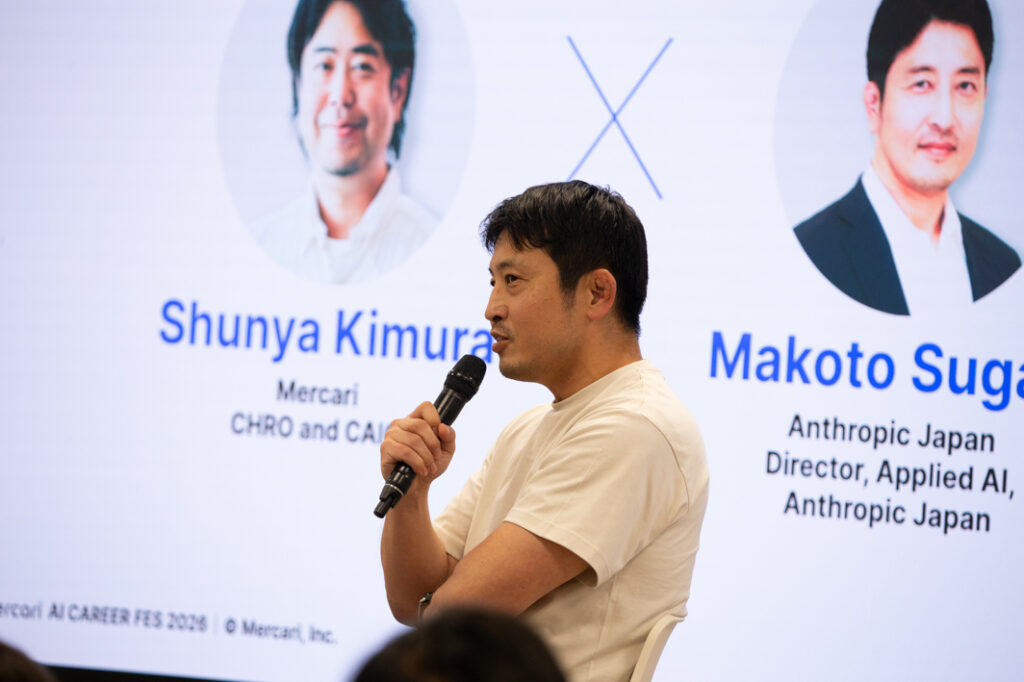
Mercari has been integrating Claude Code’s Skills feature and Model Context Protocol (MCP) into real work from an early stage, building practices that connect the company’s own data definitions and knowledge to AI agents in a secure way.
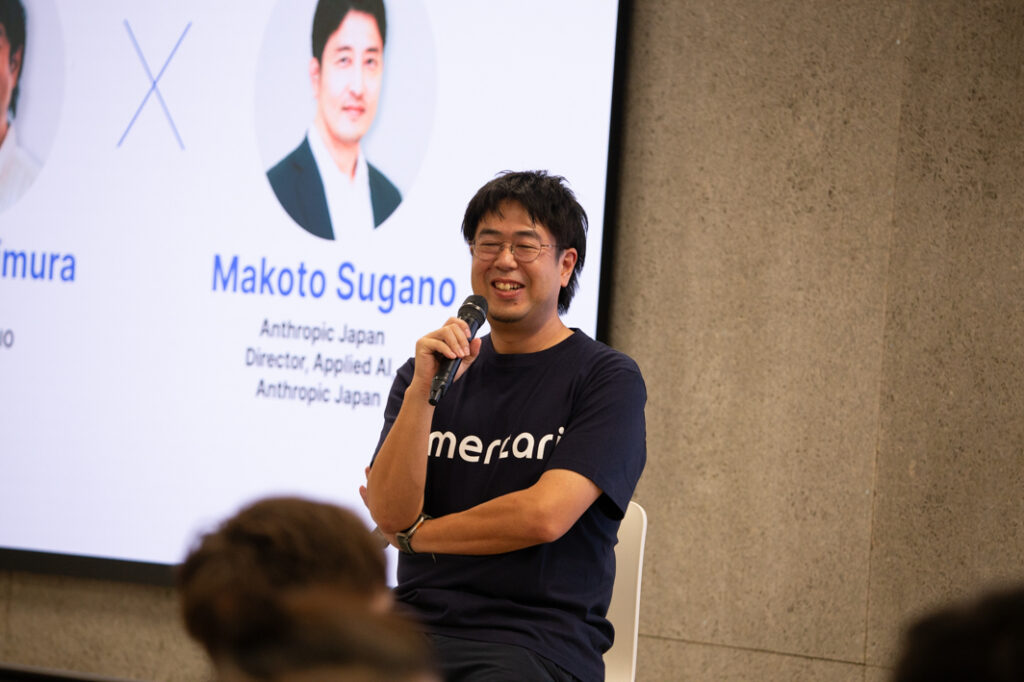
The dialogue centered on how to integrate AI into an organization, given that AI is by nature a non-deterministic system. The conversation closed on the note that, since collaboration between humans is not entirely deterministic either, it matters just as much to design AI agents with clear roles, responsibilities, evaluation criteria, and guardrails, and to integrate them as genuine members of the team.
Enjoying the chaos with an All for One mindset, toward Hypergrowth
What stood out most at this event was Mercari’s shared enthusiasm for treating AI not just as an efficiency tool, but as an opportunity to rethink products, development, organizations, governance, and individual workstyles—this passion resonates across Mercari.
In session after session, the conversations went beyond AI tool adoption and use cases to cover topics from multiple angles including decision-making premised on AI, team-structuring, expanding expertise, and the guardrails needed to keep taking risks safely. The speakers conveyed a shared determination to shape new ways of working while embracing trial and error even as the changes unfold and the answers remain undetermined.
While the event is now in the past, the knowledge and questions shared here are not a destination—they’re a new departure. The transformation toward becoming an AI-Native company is not something any one role or team can drive alone. Mercari AI Career Fes 2026 felt like the beginning of something; it saw members across the company think through, put into practice, and continually update what it looks like for people and AI to bring out the best in each other.
Thank you to everyone who joined us in person at the venue, to everyone who participated online, and to everyone who stayed for the networking session and joined the conversation with our speakers and Mercari team members. We hope the questions and connections that this event generated serve as a spark for your own next step.

Share