2025-11-27
Leaders Talk! AI/LLM Behind the Scenes Open Door Vol. 6: CHRO @Ai on People and Organizations in the AI-Native Era
Share


On June 11, 2025, Mercari launched its internal talk series Leaders Talk! AI/LLM Behind the Scenes Open Door—a radio-style session inviting leaders from across the company to discuss how AI is transforming their fields.
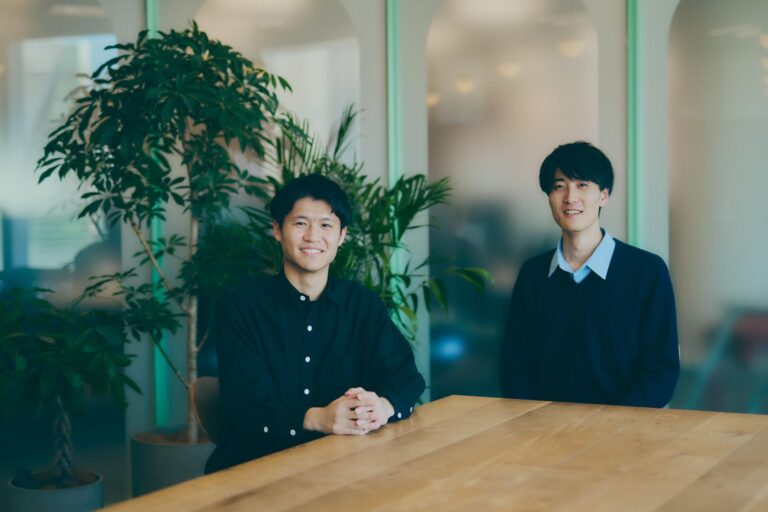
The guest for the fifth session was CHRO Ai Miyakawa (@Ai). Together with moderator Gomi Hayakawa (@gomichan) from the AI/LLM Office, Ai shared her insights on what “AI-Native” means for people and organizations as Mercari accelerates its AI/LLM initiatives. The conversation was candid, energetic, and full of real-world reflections, captured here with the same sense of immediacy as the live session.
This article was composed and written using AI tools based on an audio recording of the session. This English version was translated from Japanese using a custom generative AI model trained on Mercari’s editorial style guides and past Mercan articles.
Featured in this article
-

Ai Miyakawa (@Ai)
After joining Dell Inc. in 2003 as an HR professional, Ai worked across HR planning, compensation, and M&A for Japan and the broader Asia-Pacific region. She later joined Cisco Systems G.K. in 2014 and became Executive Officer and Head of Human Resources in August 2016. There, she led cultural transformation, engagement, and leadership initiatives, helping Cisco Japan earn first place in the Great Place to Work® rankings for large enterprises in 2018, 2021, and 2023. Beyond her corporate role, Ai is a passionate advocate for transforming “the way Japan works,” regularly speaking at seminars and conferences. She assumed her current position as CHRO of Mercari in June 2024.
-

Gomi Hayakawa (@gomichan)
Gomi founded Utsuwa Inc. in early 2015 and has since launched multiple ventures, including the lingerie brand feast and the femtech business ILLUMINATE. She joined Euglena Group in March 2022 to work on new business development for working women. After leaving in April 2024, she joined Mercari in July 2024. Gomi actively shares insights on generative AI on social media.
Generative AI as a Daily Essential — The “Real-life Doraemon” Perspective
@gomichan: Do you use AI in your day-to-day life, either personally or at work?
@Ai: Oh, absolutely. I can’t live without it anymore! (laughs) I use Gemini for brainstorming and NotebookLM to produce podcasts. Recently, I was really impressed with Manus. I tried it for one of my speaking engagements, and it generated a highly accurate script directly from my slide outline.
@gomichan: How has your impression of these tools changed over time?
@Ai: A year ago, I still thought, “They’ve got a long way to go.” But now the precision is on another level. The pace of progress has far exceeded my expectations. Honestly, I see AI today as a real-life Doraemon.
@gomichan: That’s such a fun expression, “a real-life Doraemon.” Could you explain what you mean?
@Ai: Doraemon has a “4D pocket” that can make any dream come true. The origin of it all is human imagination and wondering what the world would be like if we could do certain things. AI does the same thing. Instead of pulling gadgets from a pocket, we now retrieve knowledge and tools through generative AI to bring those ideas to life.
@gomichan: True, the speed at which we can turn ideas into reality has skyrocketed.
Turning Change Into Opportunity Through a Growth Mindset
@gomichan: Still, that same rapid pace of change can make some people anxious. How should we deal with that?
@Ai: In HR, one key concept I emphasize is the growth mindset. This theory, proposed by educational psychologist Carol Dweck, is based on more than 20 years of research showing that success is not determined by talent alone but by one’s mindset.
People generally fall into two categories. Those with a fixed mindset believe talent is innate and unchangeable; they focus on results and fear failure. Those with a growth mindset believe they can always develop through effort, feedback, and learning from mistakes.
@gomichan: Which mindset is more important in times of rapid change?
@Ai: Definitely the growth mindset. People with fixed mindsets tend to resist change, while those with growth mindsets see it as an opportunity to evolve. What’s crucial is understanding that anyone can shift their mindset.
@gomichan: Even as adults?
@Ai: Yes. The brain’s plasticity allows us to rewire how we think, just like working out strengthens muscles. By consciously changing our thought patterns, we can build new mental pathways. When challenges or setbacks arise, having that awareness helps you intentionally adopt a productive mindset. It’s like training your brain to respond resiliently.
Defining AI-Native Professionals and Mercari’s Four Strategic Pillars
@gomichan: Could you tell us about Mercari’s HR strategy for people and organizations in the AI era?
@Ai: Our HR strategy is built around four key pillars.
The first is organizational development, which means building structures that can adapt to change and strengthening our change management practices.
The second is talent development, focusing on leadership that can thrive in times of transformation and on fostering AI-Native talent. After many discussions within the leadership team, we defined AI-Native talent as “people who create new value together with AI, transcending traditional roles and organizational boundaries.” What makes this definition powerful is that it includes everyone—anyone can become AI-Native.
@gomichan: And the third and fourth pillars?
@Ai: The third is integrating AI into our systems and processes, such as parts of our recruitment and evaluation systems.
For recruitment, we’re exploring a setup where an AI agent can handle initial intake conversations with candidates who want to work at Mercari. It’s not an interview, but more of an initial chat like what HR typically conducts: learning about their experience, expectations, and motivations. This would let busy candidates connect with us at a time that works for them.
In evaluations, the goal isn’t for AI to evaluate people but to support self-assessment. For instance, AI could help employees summarize what they’ve accomplished during the review period, ensuring nothing gets overlooked. Humans would, of course, still make the final evaluations, but AI can handle parts of the process to make it more comprehensive and efficient.
Finally, the fourth pillar is organizational culture, where we’re working to embed the growth mindset. As AI-Native ways of working take hold, the gap between those who adapt and those who don’t may widen. That’s why it’s even more important for us to continually communicate that this is an opportunity for growth for every team member.
Flexibility Is the Key to an AI-Native Organization
@gomichan: Finally, do you have a message for Mercari members?
@Ai: The AI era is defined by constant change. The key is to name your fears. We often feel anxious because we don’t fully understand what we’re afraid of—is it job security, exposure of weaknesses, or something else? Start by putting it into words.
Then, distinguish between what you can and cannot control, and focus on what can be changed. Break things down into concrete, actionable steps.
@gomichan: How does that translate to the organizational level?
@Ai: As an organization, we must get comfortable with change. To stay competitive, we need to evolve, and that includes our HR systems. Today, psychological flexibility matters even more than psychological safety.
What hasn’t changed in 13 years at Mercari is our shared ideal: everyone embracing change, creating new value aligned with our mission, and taking on challenges with excitement. How we get there will keep evolving, but our vision remains the same.
Share